 Jessica Vitale : Learning Breton language in CaliforniaWe are excited to share another story in our Breizh Amerika Profiles series, spotlighting individuals who forge connections between the United States and Brittany. Today we are meeting Jessica Vitale, who is learning Breton language in California. She shares how it is difficult to learn Breton language, especially if the person does not speak French. Read on to discover our interview with Jessica, as she shares her experience discovering and learning Breton language. Tell us about yourself? I was born in Lima Peru in 1970 and lived there for ten years. We lived in Japan for a year and then moved permanently to the United States. My love of Foreign Languages comes from living in Polyglot Los Angeles where I grew up with Korean, Chinese, Vietnamese, Russians, Ukrainians students and of course Hispanic students of all sorts. French is taught in every school in the Los Angeles Unified School District yet very few people come out of it speaking fluent French. I live in a suburb of Los Angeles called Temple City with my husband and two cats. In addition to Foreign Languages, I draw and paint both traditional and digital, do soft sculpture, play the violin and teaching myself piano. In addition to Breton, I have also been learning Japanese with a teacher from Japan, and both Chinese and French with the Duolingo app. Up until last year, I worked doing the digital layout for an English language Armenian newspaper. How did you discover Breton language? Why did you decide to learn it? I love foreign languages and Celtic culture. How I found about Breton is a funny story. My late father-in-law was lying on the couch of our living room watching the movie Black Hawk Down on Netflix. He would fall asleep before the end of the movie and when he would wake up he’d realize that he missed the ending and would rewind the film a bit. He would fall asleep again, wake up, and he would rewind it again. This would happen about 20 times or so. He was also hard of hearing so the TV would be on really loud. The song Gortoz A Ran by Denez Prigent doesn’t come on until the end of the film. As my father-in-law kept rewinding the ending of the film, I had to keep listening to the ending song. At first, I thought it sounded Italian due to the operatic nature of the song but as the repeats kept happening, I began to realize it wasn’t Italian so I got curious. I looked up the credits and found the title, then I found the video on YouTube, then I began to research what the Breton language was and then I fell into the Rabbit Hole of the Breton language and Brittany. I had no idea Brittany was a country within another country with its own language and culture not to mention that it was a Celtic country, and I love Celtic culture. The only thing I knew about Brittany was that it was next to Normandy. Are there a lot of resources for English speakers to learn Breton? Sadly no. In the introduction to the English version of Brezhoneg Buan hag Aes, (Breton Quick and Easy) says that, “the lack of books in Irish, Welsh, or English to help the student of Breton has disheartened many a speaker of those languages and prevented their achieving success in the study of Breton which they had hopefully started to pursue on their own.” If it wasn’t for the fact that I find learning Foreign Languages fun, I would’ve given up a long time ago. What are the best resources you’ve found? The resources are rather scattered all over the place. The site Kervarker is good but it is really old and looks like it hasn’t been updated since the 90s. It is mostly based on the book Ni a Gomz Brezhoneg by Mark Kerrain. It’s a good starting off point. Skol Ober is supposed to be a correspondence learning site, but it seems to be mail correspondence (who does that these days?). According to the site, you are supposed to full out a form and mail it to them along with 40 Euros (I live in the U.S) They have some examples of exercises and instruction and some helpful links. Sked is another place that now offers courses for English speakers. I haven’t tried it yet but I might. Glosbe is supposed to be an all language dictionary site. You have to dig deep to find Breton in the sub-language section and it is over reliant on Artificial Intelligence. It is not always reliable from English to Breton but more so reliable from French to Breton (of course). The YouTube channel, web site, and app Brezhoweb is good for listening to the language, specially ALL the dialects. They have short segments that deal with the language and grammar but it is not in English. There are some videos on their site with English subtitles. Also, they provide subtitles in Breton so one can listen to along with the speech. That’s when you can tell the differences in pronunciation. Made e Breizh is my favorite segment. Another You Tube Channel is Tepod Mab Kerlevenez has short videos on the Breton language with English subtitles. A reading of the Breton version of The Hobbit whose translator was featured in Breizh- Amerika, can be found the You Tube channel Evertype. One interesting source I found was a website called Academia. It is a repository for academic papers of all sorts. I initially came across this site while trying to find sheet music. Because of cookies, it found out that I was studying Breton and soon bombarded me with papers that I might be interested in. One suggestion was a very extensive Breton to French dictionary which I have made it my mission to translate the French part to English and to make a version from English to French. I have added to it words in the small dictionary currently available and plan to add more. There are other interesting academic papers in English on the Breton language itself. As for books I’ve found Breton Grammar (English version) by Roparz Hemon. Kemmadur ha Plijadur and Ni a Gomz Brezhoneg by Mark Kerrain are good but they are for French speakers. Breton Quick and Easy and Colloquial Breton are for English speakers but they are both out of print. Tell us about your future website project? My ideal website would be audio visual. The visual part is not a problem but audio resources is what I would like and I don’t completely trust my pronunciation of Breton. The most troublesome aspect of learning languages with a book is the pronunciation guide. There are so many debates about the pronunciation of the language as it is. Ideally, I would probably start with the alphabet and its pronunciation, then move on to a searchable verb conjugation and searchable dictionary, and interactive conversation. It would with the alphabet and pronunciation. The worst thing about learning with books are the pronunciation guides. It’s always best to hear them rather than trying to imagine what it would sound like. Here’s an example of what that might look like: If I started with a pronunciation guide with the Breton alphabet, it would look like this:  I would go through the entire Breton alphabet with visual and sound examples. Then I’d like to add a searchable dictionary from Breton to English and English to Breton Breton to English aes adj. ↪ easy ↪ easily ↪ ease ↪ comfortable ↪ convenient ◊ aes-kenañ ↪ that simple ◊ n'eus netra aes ↪ nothing is easy ◊ aes-tre ↪ naturally (really simple) ◊ aes a-walc'h ↪ naturally (simple enough) ◊ aes Bernez! ↪ at ease Bernez! ◊ aes d'ober gantañ ↪ convenient ↪ practical adj. ↪ functional English to Breton dark a ↪ teñval ↪ du ◊ get darker ↪ teñvalaat ◊ get dark in the evening ↪ noziñ ◊ (thus) dark ↪ noz ◊ darker ↪ nosoc’h Verb Conjugation debriñ (to eat) Present Me a zebr pesked alies I eat fish often Conversation: Future Me a zebro pesked alies I will eat fish often Past Me a zebre pesked alies I ate fish often This would be best if it was video based. My idea is, you would see two people having a basic conversation while looking at each other, then in the next segment one of the two characters would look into the camera saying their lines while the viewer is expected to say the other character’s lines by reading the subtitles. This is something I’ve seen with other languages I would also a repository for articles and papers related to the Breton language, and there would also be other things like reading and comprehension, etc. 
0 Comments
 Jeromy Young and the Brittany Art ExcursionsWe are thrilled to present another captivating story in our Breizh Amerika Profiles series, spotlighting individuals who forge connections between the United States and Brittany. Today, we are delighted to introduce Jeromy Young, a professional artist residing in Lafayette, Louisiana. Read on to discover our interview with Jeromy, as he shares his experience with the Brittany Art Excursions, artistic expeditions throughout Brittany. [Breizh Amerika] Can you tell us about yourself? [Jeromy] I am a professional artist living in Lafayette, Louisiana. I mostly work with oil paint, but I love to draw and dabble in different mediums. I also own a frame shop, which is next door to the studio that I share with my wife, Jessica Moore. She is also a professional artist who owns an art school where we both teach various types of art lessons. What are the Brittany Art Excursions? The Brittany Art Excursions are just that, a series of excursions out to different areas of Brittany to sketch and capture its unique beauty. Our home base this time is the Manoir Cache in Merdrignac. From there we will journey out to the rocky coast, medieval Dinan, Carnac, to Rennes for a printmaking workshop, to ancient megaliths and forests. We will enjoy the culture, guided by Sarah Castille, who lives in Brittany and put together the itinerary for us. Why did you pick Brittany? We picked Brittany for many reasons: The cajuns have so much Breton ancestry, the natural beauty and wild landscapes are perfect for sketching and painting plein air, and artists such as Monet and Gauguin painted in Brittany, it is like a place in a dream. Plus we heard that the best crêpes and butter are there. 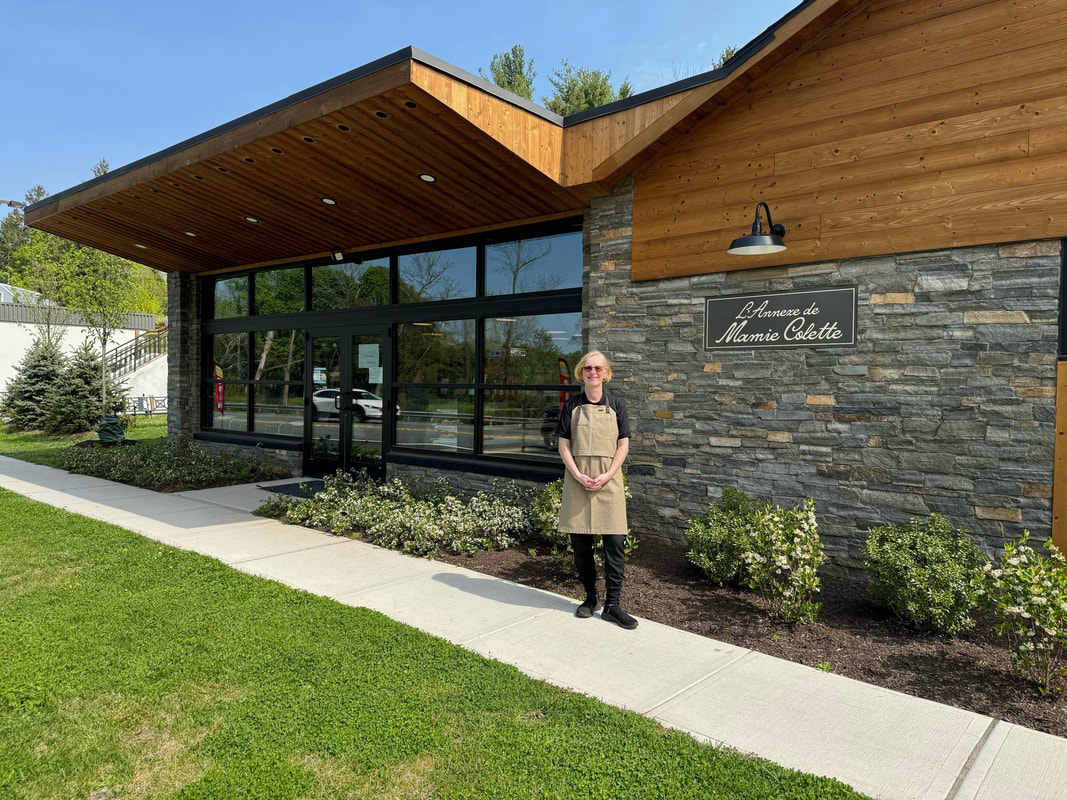 Nous sommes ravis de partager une nouvelle histoire dans notre série Breizh Amerika Profiles, qui met en lumière les membres qui relient les États-Unis et la Bretagne. Aujourd'hui, nous avons le plaisir de vous présenter Isabelle Noblanc. Isabelle nous partage son parcours d'expatriée, et son dernier projet d'ouvrir une crêperie dans le New Jersey. Lisez la suite pour découvrir notre interview. Pouvez-vous nous parler de votre lien avec la Bretagne ? [Isabelle] Je suis née et ai grandi en Bretagne, à Lorient et à Larmor-Plage. Etant petite, dès que je n’avais pas école, on pouvait me trouver sur les plages de Larmor, en train de pêcher, jouer, faire de l’optimist (petit voilier) et nager. Je suis profondément attachée à la Bretagne, à sa culture, et ai découvert la force du réseau breton en dehors de la Bretagne. Une anecdote amusante est lors de mon arrivée sur la base aérienne d’Istres, où je faisais mon service militaire. Un collègue est venu se présenter et me donner la liste des bretons de la base, au cas où j’aurais besoin de quoi que ce soit. Quelle est votre histoire d’expatrié ? A l’issue de mes études d’ingénieur aéronautique, en 1993, je suis partie aux Etats-Unis pour y faire un stage de fin d’année. Je n’avais alors pas spécialement d’attirance pour les USA, pensant ça ne serait pas suffisamment exotique. Je pensais “connaitre” la culture américaine, étant donné le nombre de films américains sur les télés française. Mais je voulais partir à l’étranger, hors d’Europe et l’opportunité de faire de la recherche à l’université de Buffalo, NY était intéressante. Une fois sur place, j’ai découvert une culture extrêmement accueillante, l’histoire complexe des vagues successives d’immigrants, une façon de vivre qui respecte l’individualité tout en apportant le soutien de la collectivité. J’ai également été séduite par les grands espaces verdoyants. Vers la fin de mon séjour, j’y ai également rencontré ma premiere compagne, qui est venue me rejoindre en France un an plus tard. Pendant 6 ans, nous avons vécu en France, mais passions toutes nos vacances dans ma belle-famille, à Buffalo, et ne regardions que la télé américaine. En 2000, nous avons décidé qu’il était temps pour nous de déménager définitivement aux USA. J’ai quitté mon poste chez Arianespace, me suis inscrite pour un MBA à l’université de Cornell, et nous sommes parties pour Ithaca, NY. Depuis, j’ai vécu dans plusieurs états (NY, NJ, MN, IL, PA), ai tenu des rôles de dirigeant d’entreprise dans le monde corporate, me suis mariée avec une française qui est venue me rejoindre aux USA, et nous avons planté nos racines en Pennsylvanie où nous avons récemment ouvert deux boulangeries françaises. Pouvez-vous nous en dire plus sur votre nouvelle histoire d'entrepreneuriat ? En 2021, Magali, ma femme, qui était alors boulangère dans une boulangerie de Princeton, NJ, a eu envie d’ouvrir sa propre boulangerie, où elle pourrait se consacrer à la viennoiserie française artisanale. Connaissant la qualité des viennoiseries qu’elle avait créées, j’ai vite adhéré à ce projet. Ayant moi-même dirigé et transformé des sociétés, nous nous sommes partagé les tâches. Je me suis attelée à la création de notre viennoiserie, Mamie Colette, située a Newtown, PA, et Magali a organisé la partie production. Notre succès a été immédiat. Il nous a fallu quelques mois pour expliquer à notre communauté la différence entre des produits industriels et des produits artisanaux, et pourquoi il faut 2 jours pour confectionner un croissant, et pas quelque minutes. Nos clients, maintenant fins connaisseurs de viennoiseries françaises, nous ont ensuite demandé du pain français. Les fours à pain demandant plus de place, nous avons ouvert une deuxième boutique, L’Annexe de Mamie Colette, située à Titusville, NJ. Le concept y est different. Nous y fabriquons et offrons du pain, de la viennoiserie et pâtisserie, et avons décidé de rendre honneur à la Bretagne en y incluant une partie crêperie. Nous confectionnons des crêpes de froment et de sarrasin à la demande, et avons une petite partie épicerie fine avec des produits bretons. Que savent les Américains des crêpes bretonnes ? En ont-ils un préféré ? Nos clients connaissaient uniquement les crêpes de froment, souvent pas très bonnes et toujours très remplies d’ingrédients sucrés ou salés, et ne connaissaient pas la relation entre la Bretagne et les crêpes. Nous confectionnons des crêpes authentiques Bretonnes, en suivant les méthodes que m’ont enseignées mes amies qui tiennent la crêperie La Rozell à Lorient. Nos clients ont été très réceptifs, et n’ont pas hésité à tenter les crêpes de blé noir. Leur crêpe préférée est la complète, mais ils aiment également les crêpes à base de saucisse, de saumon, ou de fromage de chèvre. Et nous n’avons eu qu’une seule demande de ketchup (que nous avons refusée :-)). Qu’est-ce qui vous manque le plus de la Bretagne ? Les promenades sur la plage, les petites chapelles en campagne, la fraicheur des poissons, coquillages et crustacés. Les crêpes me manquaient avant, mais plus maintenant… L’Annexe de Mamie Colette 1462 River Road, Titusville, NJ, 08560 We’re open: Tue: 7am-2pm Wed & Thu: 7am-3pm Fri-Sun: 7am-5pm 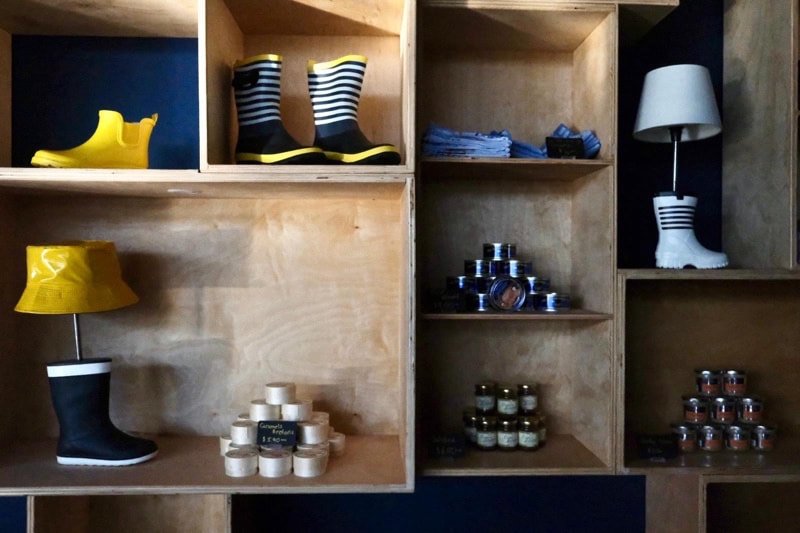 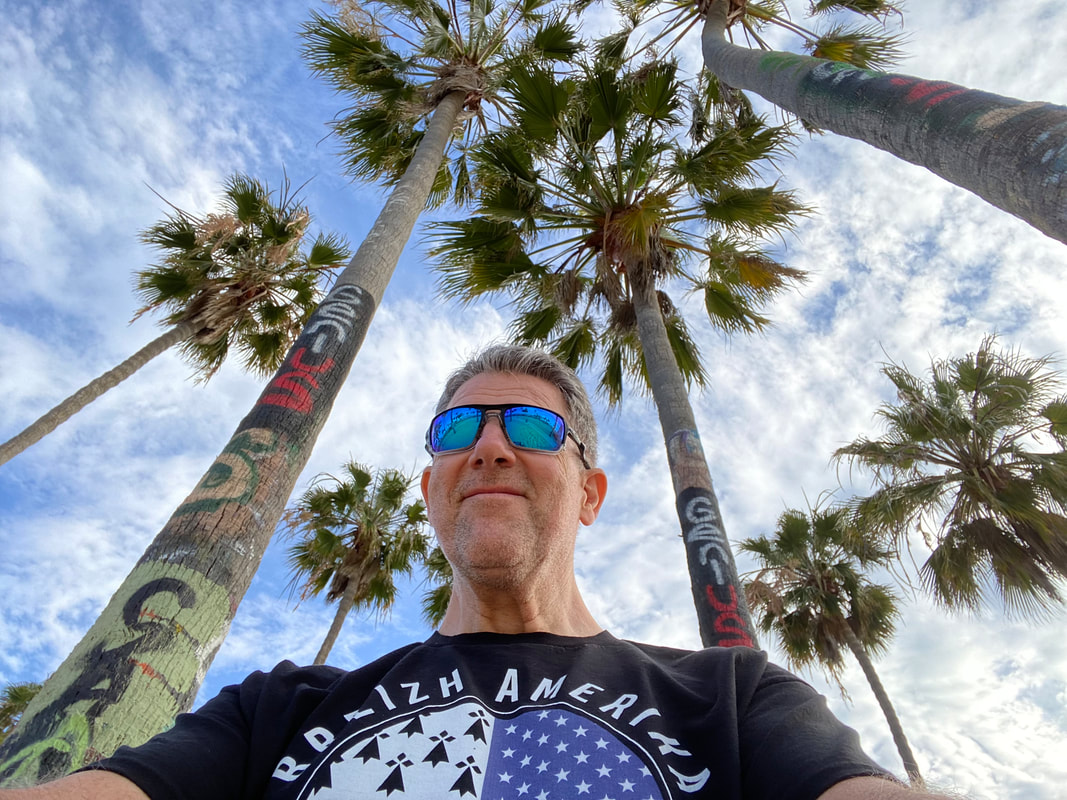 Breizh Amerika Profile : Alain RollandWe are delighted to share a new story in our Breizh Amerika Profile series, which highlights members who connect the United States and Brittany. Today, we have the pleasure of introducing Alain Rolland, who lives in San Diego. Alain shares with us his experience as an expatriate, his latest book, and his future projects. Read on to discover how Alain continues to maintain strong ties between Brittany and the United States through his passion for writing. [Breizh Amerika] What is your link to Brittany? [Alain] I was born and raised in Brittany. My parents both spoke Breton and were from Landivisiau (Finistère) where I lived for about 20 years until I got married. My five brothers and sisters spent their entire lives in Brittany. When I was 8 years old, I learned how to play the ‘bombarde’ in the local ‘bagad’ (Breton marching band). I played in many festivals and even had the opportunity to play at a televised Christmas mass. As a teenager, I was a member of a local Celtic band (Penn Dologed, then Gleskeret) where I played the ‘bombarde’, flute and saxophone at ‘fest-noz’ (dancing night party) and concerts, even abroad. I later joined a folk-rock band (Comedie Humaine) and played on the radio and at the Golf Drouot in Paris, while continuing to play the ‘bombarde’ in concerts accompanied by the organ in many churches around Brittany. I studied Pharmacy at Rennes University and graduated as a Doctor in Pharmacy in 1981. After obtaining a DEA in Pharmacokinetics, I did my Ph.D. studies at the School of Pharmacy in Rennes on a novel nanotechnology that I invented and developed all the way to a clinical trial in cancer patients. When did you arrive in California and why? After obtaining my Ph.D. in 1987, I joined the brand-new Advanced Drug Delivery Research center of one of the world’s largest pharmaceutical companies (Ciba Geigy, now Novartis) in the UK. With my wife and two young children, we spent two years abroad; our third son was born in England. In 1989, I returned to France and joined another pharmaceutical company in Sophia Antipolis. After living in the South of France for almost five years, I was offered the opportunity to move to the USA to join a biotech startup in Texas as one of the very first employees. I accepted the challenge to leave everything behind and move with my family from the French Riviera to Houston to start one of the first gene therapy companies in the world. At GeneMedicine, I led the discovery and development of several gene therapies for cancer and cardiovascular applications. After nine years in Texas, I was offered an executive position in San Diego, California in another publicly traded gene therapy company developing immuno-oncology products and genetic vaccines. Therefore, in 2002 we all moved to California where we have lived for the past 20 years. Today, after working as CSO, COO and CEO for different pharma/biotech companies in San Diego, I am still active in the therapeutic space. I have four grandchildren, a boy and a girl in San Diego and another boy and girl in Texas. Can you tell us about your new book? Why did you decide to write it? At the beginning of the Covid-19 pandemic, confined at home, I was sorting through some old papers, and I stumbled upon a few hand-written pages from my dad (who passed away 25 years ago). In those couple of pages, he reported his odyssey through World War II (with locations and dates, and a few anecdotes). For some reason, I felt compelled to start writing a historical fiction, based on his journey and true events. I took an immense pleasure in searching through documentation, learning about the places he had crossed and the major events of that period. I imagined a flurry of intertwined stories and characters (Jean, the erudite joker; Fanch, the bon vivant; Théo, the simpleton hostler; Léon, the unfortunate teacher; Violette, the spinster organist; Émile, the tenor; André, the poet miller; Frida, the Teutonic bewitcher and her lover Janusz, the lame hunchback; Gus the ingenious and facetious escapee; Amadeusz the Francophile haulier; Gérard, sly as a fox; Ben, the Texan liberator; Dmitri, the Russian soldier and Latin scholar; Marie, the madly in love, and many more… The book, written in French, is titled “SIX ANS D’ABSENCE – Un confinement interminable”. Summer 1939, Alexandre lives peacefully in Brittany with his wife and newborn child. Suddenly, war is declared. He is enlisted on the Eastern Front line with his engineer regiment. His odyssey will then take him to Flanders, Belgium and Dunkirk where he misses the last boat for England. Taken prisoner, he has to walk to Holland to then be transported to two prison camps in Pomerania. From the stalags to the village of Schivelbein, where he works in a Kommando for five interminable years of confinement, Alexandre will go through many tragic, but also sometimes comical adventures, surrounded by a plethora of endearing characters. The Red Army will liberate Alexandre; he then experiences new dramatic adventures before his return, after six years of absence, to his unknown little boy and his wife who were impatiently waiting for him. After 30 years spent in the USA, writing a novel in French was a significant challenge but the historical fiction, “Six Ans d’Absence”, is finally published in France. It is available to order at the Editions Spinelle, Paris and also at Amazon.Fr; for people in France, one can also order it at the FNAC or any bookstore. I have also adapted the book in English which was another interesting experience because of the language-specific idioms, the alexandrines from André the miller, the jokes and other items not directly translatable. Although there are many books taking place during WWII, I do hope to be able to find a literary agent who will accept the challenge to help me get that story now published in English. What do you miss from Brittany the most? First and foremost, I miss the family and friends. When we go back to Brittany, we enjoy spending time with them, going to the beach to look for seashells or in the woods to pick up mushrooms, then playing cards and games in the evenings. The amazing food from Brittany, and other French regions, is also one of the things I miss. Even though California has some decent (but expensive) French restaurants, bakeries and grocery stores, nothing can replace a traditional meal in Brittany. I miss everything from the bread and butter, pastries, ‘crêpes’ and ‘galettes’, seafood (crabs, oysters from Cancale, shrimps and ‘langoustines’), various pâtés and rillettes, and so many more dishes… Even though my wife is a true ‘cordon bleu’ and even cooks ‘Kig ha farz’, the American ingredients end up being somewhat different. Finally, I also miss the Breton culture and the Celtic music, the beautiful countryside and coastline, the old villages of Brittany with their granite steeples, the unique scent of the ocean and seaweeds, and the salty wind and drizzle. I miss…Brittany! 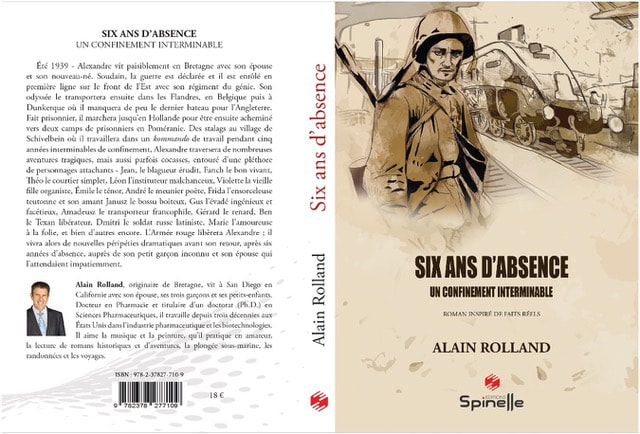 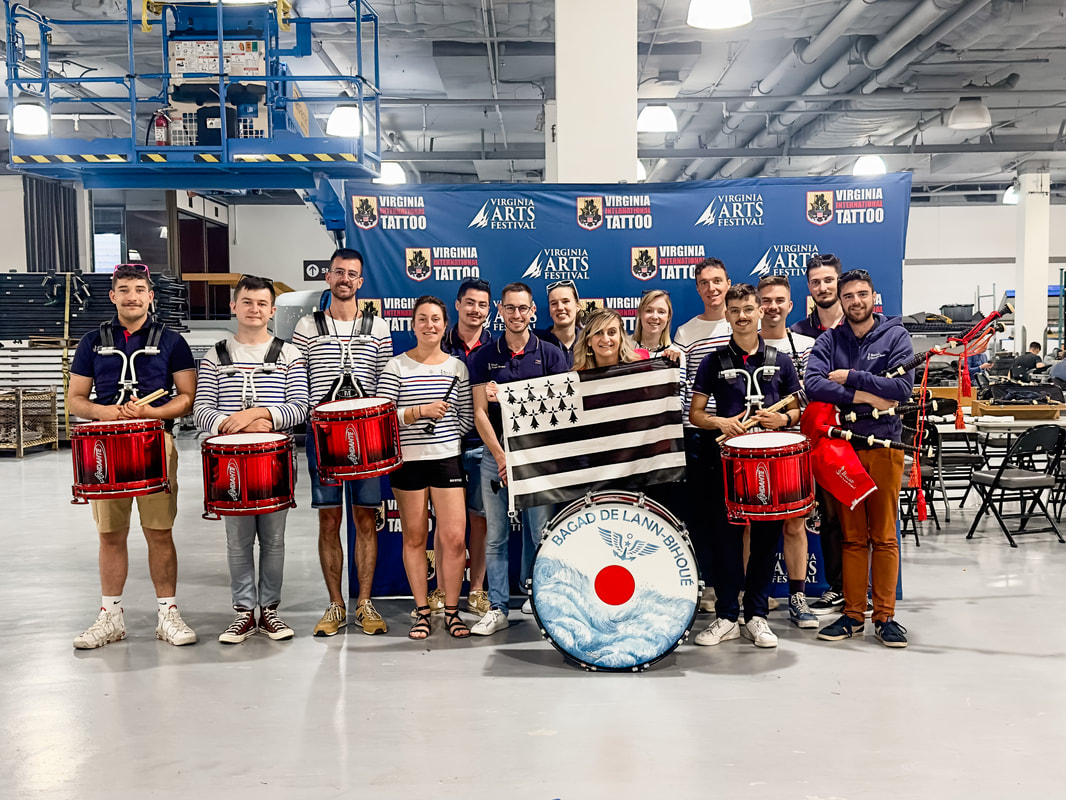 Breizh Amerika Profile : Ophélie Le LivecAujourd'hui, nous sommes heureux de présenter Ophélie Le Livec, une passionnée du tourisme depuis plus de 11 ans. Ophélie a travaillé bénévolement au Festival Interceltique pendant plusieurs années. Elle a commencé sa carrière dans le tourisme à l'Office de Tourisme de Carnac, suivi d'une saison à l'Office de Tourisme de Lorient, puis maintenant à l’Office de Tourisme de Norfolk, en Virginie. En 2022, Ophélie a été honorée/élue par Destinations International "30 Under 30 Tourism Emerging Leader", une reconnaissance internationale qui la motive à rester dans le tourisme. Dans cette interview, Ophélie partagera avec nous sa passion pour le tourisme et la façon dont elle tisse des liens entre Norfolk et la Bretagne, et sa rencontre avec l'incroyable Bagad Lann Bihoué. [Breizh Amerika] D'où venez-vous en Bretagne ? [Ophélie Le Livec] Je suis originaire de Ploemeur et j'ai grandi à Lomener, un petit port breton. J'ai également passé une année au Canada avant de vivre successivement à Carnac et à Brest. Depuis 2015, j'habite à Virginia Beach et travaille à Norfolk. Quand et pourquoi es-tu devenu expatrié aux USA ? Mon mari est également Breton, originaire de Riantec. Nous avons déménagé aux États-Unis en 2015 suite à une mutation de trois ans à Norfolk, où il travaillait pour la Marine Nationale. Aujourd'hui, il travaille pour l'OTAN en tant que civil. Le siège de l'OTAN se trouve ici à Norfolk dans l’état de Virginie, situé à environ 3h30 en dessous de Washington D.C. Dites-nous ce qui se passe avec le Bagad de Lann Bihoue près de chez vous ce week-end ? Je recommande vivement à tous les Bretons et Français des États-Unis de se rendre à Norfolk pour un week-end mémorable. Située au milieu de la côte Est des États-Unis, notre ville accueille chaque année le Virginia International Tattoo ainsi que le NATOFest. Voici un aperçu des événements du week-end (pour plus de détails sur les heures, consultez la brochure) :
Norfolk est également connue pour abriter la plus grande base navale au monde. Une autre particularité amusante de la ville est la présence de plus de 130 statues de sirènes. J'adore travailler à Norfolk, car il y a tellement de festivals incroyables qui valent le détour pour un weekend d'évasion. De plus, l'aéroport est très pratique avec des vols directs depuis de nombreuses villes des États-Unis. Enfin, je trouve que les habitants de Norfolk sont vraiment accueillants et chaleureux. Qu'est-ce qui vous manque le plus de la Bretagne ? Ce qui me manque le plus de la Bretagne, c'est difficile à choisir, mais en premier lieu, ma famille et mes amis me manquent énormément. Toute ma famille habite en Bretagne et dans certaines régions de France, donc je ne les vois pas souvent. Ensuite, je dirais que ce qui me manque vraiment, c'est la culture bretonne, les crêperies (surtout pour les galettes) et le cidre. Je trouve notre région magnifique, comme on dirait aux USA, c'est un véritable joyau caché. En tant qu'expatriée, je suis très fière de mes racines bretonnes et je suis d'autant plus heureuse de retrouver les petites choses que j'appréciais quand j'y habitais, comme les marchés, les Fest Noz ou encore les jeudis du port. J'adore parler de la France et de la Bretagne aux Américains que je rencontre. Mes collègues et amis américains sont bien au courant que la Bretagne est la plus belle région de France (selon moi, haha). Je suis fière de mes racines bretonnes et je cherche toujours des moyens de promouvoir ma région et d'encourager plus de visiteurs à découvrir ses merveilles. La France est un pays magnifique, avec de nombreuses régions à découvrir et je suis heureuse de pouvoir en parler avec passion. 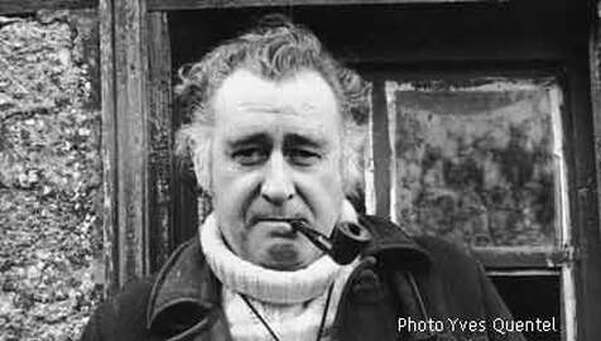 Youenn Gwernig : Poète, écrivain, chanteur et défenseur de la langue bretonneVous êtes-vous déjà demandé qui était Youenn Gwernig ? Né Yves Guernic, ce poète et écrivain franco-américain d'origine bretonne a eu une vie bien remplie et a laissé une empreinte indélébile dans le monde de la littérature et de l'art. Outre ses talents d'écrivain et de poète, Youenn Gwernig était également sculpteur, musicien et chanteur. Bien qu'il se soit révélé tardivement dans la chanson, il a su captiver le public avec ses mélodies bretonnes envoûtantes. Il était également sonneur, peintre et producteur de télévision pour France 3 Bretagne. C'est en 1957 qu'il émigre aux États-Unis. Là-bas, il fréquente assidûment le quartier intellectuel West-Side et la "Beat Generation". Restant une douzaine d'années dans le Bronx, Youenn se fit naturaliser Américain et rapporta l'influence de New York dans quelques poèmes. Il revient en Bretagne, avec sa femme et ses trois filles, en 1969 et se consacre à la défense de la langue bretonne. À son retour, il crée l’association Radio télé Brezhoneg pour défendre la place du breton dans les médias. Avec des valeurs humanistes et universelles, il rédigeait ses écrits indifféremment en breton, français ou anglais, mettant en avant la richesse de chaque langue. Il a écrit un roman autobiographique, "La grande tribu", paru en 1982 chez Grasset, dans lequel il raconte son expérience américaine. Il a également publié plusieurs recueils de poésie, tels que "An Toull en nor" ("Le trou dans la porte) en 1972, "An Diri dir" ("Les escaliers d'acier") en 1976. Son œuvre poétique a été récompensée en 1996 par le Prix Xavier de Langlais. En somme, Youenn Gwernig était un artiste complet, qui a su faire rayonner la culture bretonne à travers le monde tout en laissant derrière lui une œuvre poétique riche et inspirante. Les livres qu'a écrits Youenn Gwernig et leur héritageYouenn Gwernig a laissé une empreinte significative sur la littérature bretonne contemporaine. Il a écrit des poèmes, des romans et des essais dans lesquels il a exploré la culture et la langue bretonnes ainsi que ses propres expériences en tant que Breton vivant aux États-Unis. Son œuvre, écrite en breton, en français et en anglais, est un témoignage de sa vision humaniste et universelle, qui cherchait à transcender les frontières culturelles et linguistiques. Son premier recueil de poèmes, intitulé "An Toull en nor" ("Le trou dans la porte"), publié en 1972, a été salué par la critique pour sa poésie lyrique et son engagement en faveur de la langue bretonne. Il a également publié des recueils de poèmes tels que "An Diri dir" ("Les escaliers d'acier") en 1976, "Bugale hag orin" ("Enfants et anges") en 1984, et "Gouel Broadel ar Brezhoneg" ("Fête nationale de la langue bretonne") en 1999. Son roman autobiographique, "La grande tribu", publié en 1982 chez Grasset, est considéré comme son chef-d'œuvre. Il raconte son expérience de la vie aux États-Unis dans les années 1960 et son retour en Bretagne en 1969. Le livre a été acclamé pour sa prose poétique et son exploration de la question de l'identité culturelle et linguistique. En plus de son travail littéraire, Youenn Gwernig a également été actif dans la promotion de la langue bretonne dans les médias. À son retour en Bretagne en 1969, il a créé l'association Radio télé Brezhoneg pour défendre la place du breton dans les médias. Il a également travaillé comme producteur de télévision pour France 3 Bretagne, où il a produit des programmes en breton pour la télévision. L'héritage de Youenn Gwernig est considérable. Il a été une voix importante dans la défense de la langue et de la culture bretonnes, et son travail a inspiré une nouvelle génération d'écrivains bretons. Sa vision humaniste et universelle, qui cherchait à transcender les frontières culturelles et linguistiques, continue d'inspirer des personnes aujourd'hui. Son travail littéraire reste un témoignage important de l'histoire culturelle bretonne et de l'expérience de la diaspora bretonne aux États-Unis. Youenn Gwernig, ami de Jack KerouacJack Kerouac et Gwernig se sont-ils déjà rencontrés ? Où sont-ils amis? En effet, lorsque Youenn vivait à New York dans les années 60, il fréquentait les acteurs de la "Beat Generation". Cette période marqua un tournant dans sa vie artistique, le poussant à se consacrer davantage à l'écriture et à la poésie. La rencontre avec Kerouac fut une source d'inspiration importante pour Youenn, qui partageait avec l'auteur de "Sur la route" une certaine sensibilité artistique et une fascination pour la vie et la liberté. C'est d'ailleurs dans un poème intitulé "À Jack Kerouac" que Youenn lui rend hommage après sa mort en 1969. 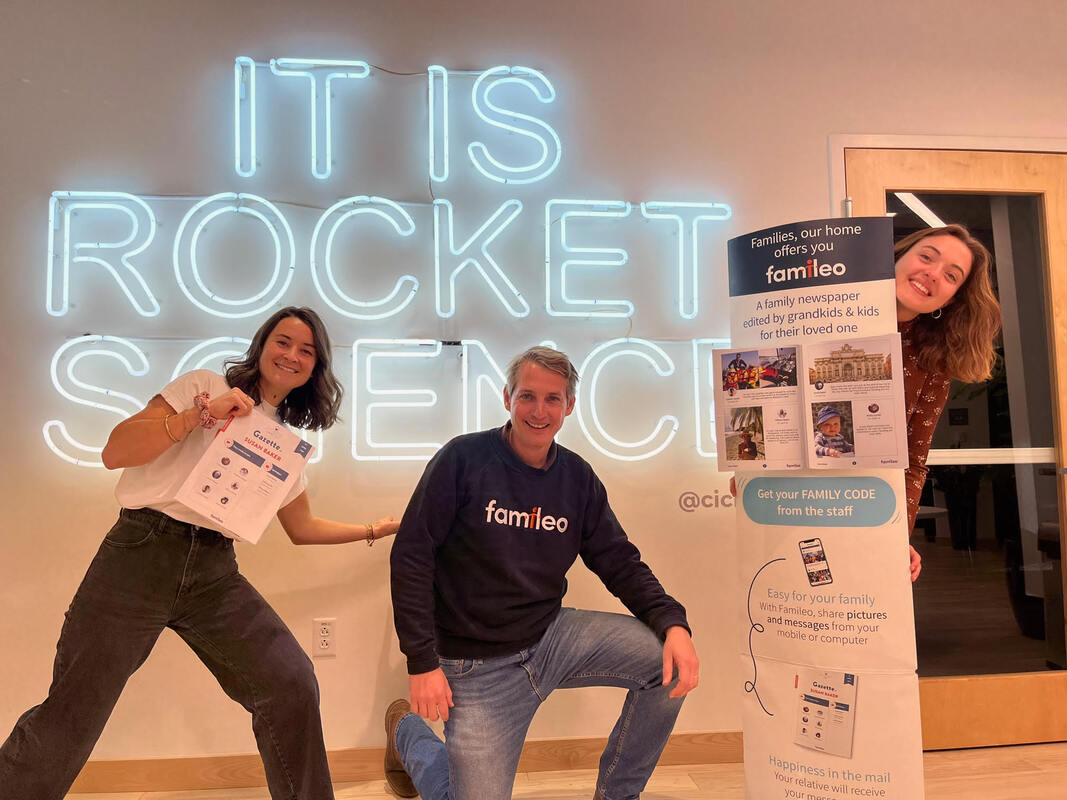 Famileo à BostonDepuis 2016, le Breizh Amerika Startup Contest sélectionne des startups bretonnes innovantes pour se rendre aux États-Unis afin de participer à un programme d'accélération pour les aider à déterminer si les États-Unis sont un bon marché pour elles. En 2019, Famileo a été l'un des gagnants de notre concours. Nous avons récemment eu une conversation avec leur fondateur, Armel de Lesquen, pour connaître toutes leurs dernières nouvelles. [Breizh Amerika] Famileo a participé au Breizh Amerika Startup Contest en 2019. Vous venez de franchir un pas en vous installant aux États-Unis pour continuer à vous développer sur le marché nord-américain. Dites-nous pourquoi c'était le bon moment de faire ce pas ? [Armel] Je ne sais pas si cela était le bon moment au regard de la crise que nous traversons en ce moment. L’inflation est très importante aux US et la parité €/$ ne joue clairement pas en notre faveur d’un point de vue économique. Mais la décision a été prise et cela ne va pas nous empêcher d’avancer ! Toutefois, nous ne regrettons pas de nous être lancé car nous sommes convaincus que c’était le bon moment en interne et en externe. En effet, Famileo est une entreprise rentable en France dont le concept n’est pas encore existant aux États Unis. Attendre plus longtemps aurait été de prendre le risque de copie outre atlantique. De plus, ayant déjà de l’activité au sein d’une centaine de maisons de retraite américaine la gestion au quotidien avec le décalage horaire devenait très compliqué. Enfin, comme tout entrepreneur le sait, attendre c’est avoir la certitude de ne pas faire avancer son projet alors qu’avancer nous permet de faire face aux difficultés et donc de pouvoir y répondre. Quels ont été certains des défis lorsque vous avez rencontré lorsque vous avez décidé de faire ce déménagement? Les défis ont été nombreux et nous les avons découvert au fur et à mesure. Tout d’abord ou s’installer aux US ? C’est une vraie question car cela n’engendre pas les mêmes dépenses, la même capacité à recruter et la même flexibilité dans les déplacements. Nous avons choisi Boston car c’est un peu moins cher que NYC, que la main d’œuvre y est de grande qualité et que les vols directs avec la France y sont nombreux. Enfin, le réseau des français entrepreneurs y est important ce qui simplifie les contacts et les écueils à éviter. Ensuite, l’aspect juridique et fiscal n’est pas une mince affaire. Tout est différent ici. Par exemple, même en étant accompagné, l’obtention d’un visa est longue et laborieuse. La définition de votre statut fiscal est aussi un sujet important et je ne peux que conseiller de se faire aider en local. Étant venu avec 2 collaboratrices, les aspects contrats de travail et expatriation sont aussi des sujets complexes. Les notions de statut, de rémunération et de cadre de mission doivent être bien définis en amont. Enfin, l’autre sujet à venir qui sera difficile consistera au recrutement de nos premiers collaborateurs américains. Cela n’est pas simple car le rapport de force a évolué. Nous devons séduire et convaincre des Américains de rejoindre l’aventure d’une boite française souhaitant devenir américaine. Cela tout en prenant en compte les attentes spécifiques et locales d’une population connaissant le plein emploi. Dites-nous comment vous envisagez d'attaquer le marché américain ? D’un point de vue business nous allons attaquer le marché américain sous l’angle de nos clients historiques : C’est à dire les maisons de retraite. C’est un angle plus simple car nous avons la possibilité de rencontrer nos prospects directement pendant des salons ou de les contacter en direct. Etant basé à Boston, nous allons nous focaliser sur la côte Est afin de ne pas nous disperser et ne pas perdre trop de temps dans les transports. La taille du pays qui est un avantage en terme de potentiel peut s’avérer être mortifère en terme de couts et temps de déplacement. Quelle a été la réaction initiale de vos nouveaux clients américains et la traction obtenue ? Quand nous avons annoncé à nos clients que nous nous implantions sur place, leur réaction a été très positive. En effet, les américains ont du mal à concevoir que nous ne soyons pas sur place pour faire du « business » avec eux. C’est un gage de crédibilité et de sérieux pour nos clients que de voir que nous nous engageons humainement et financièrement dans notre projet. Cependant, en terme de traction cela reste long. A ce jour, nous ne sommes que trois français basés à Boston et travaillant chez Famileo. Nous savons que nous devons nous américaniser pour rassurer nos prospects et simplifier la démarche d’engagement. En quoi le Breizh Amerika Startup Contest a-t-il été utile dans votre parcours de startup ? Le Breizh Amerika Startup Contest a été notre premier pas vers les États Unis. Nous avons pu tester notre solution auprès de fonds d’investissement et d’utilisateurs potentiels. Cela nous a permis de mieux comprendre les enjeux et surtout de valider le fait que s’implanter dans un pays comme les Etats Unis n’était pas une « piste verte ». Les différents retours positifs sur notre solution nous ont cependant donné l’envie d’aller plus loin et ont sans aucun doute été l’un des facteurs clefs dans le processus de décision de nous implanter là bas. POUR SAVOIR PLUS SUR >>> FAMILEO Sébastien Le Corfec, cofondateur West Web Valley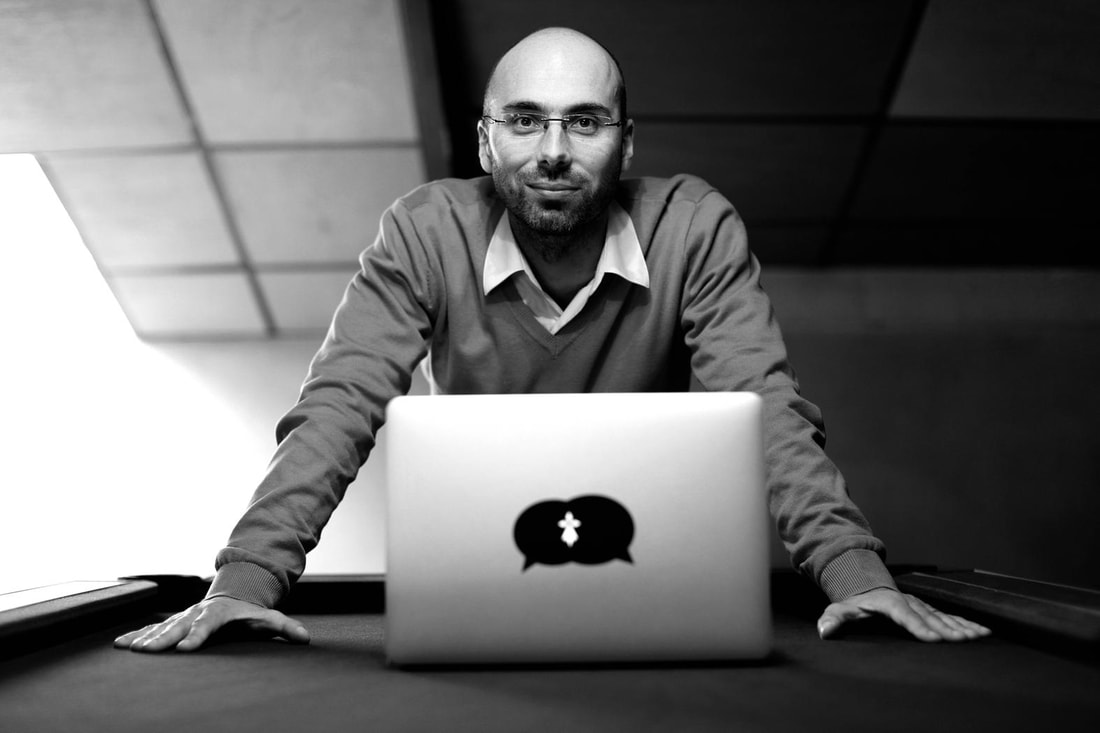 BREIZH AMERIKA PROFILES | Sébastien Le Corfec
Sébastien Le Corfec est bien connu en Bretagne pour son travail dans le milieu des startups, peu connaissent son intérêt pour la diaspora bretonne. Nous avons rencontré Sébastien pour en savoir plus sur ses futurs projets. Parle-nous un peu de vous? Je suis un entrepreneur originaire de Saint-Renan (au nord de Brest), marié, 2 enfants. Je fais partie de ses anciens combattants du digital qui ont débuté à coder au siècle dernier. En tant que développeur, j'ai eu la chance d'écrire les premières lignes de codes des 1ers réseaux sociaux et plateforme de covoiturage en France (création d'une dizaine de sociétés en 20 ans d'entreprenariat). Après quelques cessions, j'ai enchainé en créant West Web Valley 1 (fonds de 35 M€, 20 participations), le West Web Festival (SXSW au cœur des Vieilles Charrues) et aujourd'hui associé de la société de gestion Epopée (400M€ sous gestion). J'ai toujours œuvré à différent niveau pour la Bretagne en étant notamment associé du Magazine Bretons. Qu'est-ce que le Breizh World Tour et qu'essayez-vous d'accomplir ? La diaspora bretonne me fascine. C'est un serpent de mer qui est complexe à fédérer et à faire perdurer. Il y a quelques semaines, j'ai lancé auprès de quelques connaissances BretonnesBretons.com, c'est les Bretons du monde en circuit court ! Pour cette phase 1, l’objectif était de cartographier quelques bretons du monde afin de faciliter par la suite des échanges tant au niveau business qu’au niveau expérience de vie. Dès aujourd’hui, depuis l’application mobile, il est possible d’être hébergé à Melbourne par Emmanuel (originaire de Billio) ou de demander l’expertise en objet connecté à Laurent basé Chine (originaire de Vannes). La plateforme permet également d’échanger avec des bretons expatriés souhaitant revenir travailler en Bretagne. La phase 2 débute le 20 juillet en allant à la rencontre des Bretons des USA en utilisant la plateforme BretonnesBretons.com. Quoi de mieux pour valider si le projet a du sens ou pas ;-) La phase 3 sera lancée à l'automne si je parviens à aligner les planètes avec l'ensemble des parties prenantes. La diaspora bretonne est un bien collectif. Pouvez-vous nous donner des dates et des villes où les gens peuvent vous rencontrer ? Côté roadtrip, je serai disponible (avec ou sans ma petite famille) pour boire des verres et réaliser des micro interview de vos parcours (D'où viens-tu ? Ton parcours ? Pourquoi cette ville ? Tu y fais quoi ? Que peux faire la Bretagne pour toi et inversement ? Un retour en Bretagne de prévu ?) Voici les dates et les villes : - New York : Jeudi 21 et vendredi 22 juillet - Washington : 23/24 juillet - Miami : du dimanche 24 au mercredi 27 juillet --> Je vois notamment les bretons de Landquire - Las vegas : 3 août - San diego : 5 août - Los angeles : du 6 au 8 août - Région de San Francisco : du 10 au 13 août Je vous invite à nous rejoindre sur BretonnesBretons.com ou à me contacter directement sur Linkedin.  BREIZH AMERIKA PROFILES | Séverine Cholet
Séverine Cholet vit à la Nouvelle-Orléans. Elle nous parle de son amour pour la Louisiane et de faire découvrir aux locaux de vraies crêpes bretonnes. Quel est votre lien avec la Bretagne ? Je suis née à Nantes et j'ai déménagé à l'âge de 19 ans à Rennes. Quand êtes-vous devenue expatriée ? De nombreux expatriés bretons choisissent SF et NYC, pourquoi avez-vous choisi la Louisiane ? Les Etats Unis m'ont toujours attiré depuis l'adolescence, j'ai toujours rêvé d'y voyager et toujours eu la volonté d'y vivre. Mes voyages ont commencé à l'âge de 24 ans, Las Vegas. New York, Miami, Orlando, Pensacola puis Nouvelle Orléans. Les grandes villes d'Amerique comme New York me donnent le tourni, comme à Paris j'ai l'impression de perdre mon identité. Je suis tombé éperdument amoureuse de la Nouvelle Orléans. L'ambiance générale, l'acceuil des gens, leur bonne humeur. La beauté et le charme de l'architecture, je me sentais loin de la France mais tout à fait chez moi. Trouvez-vous des similitudes culturelles entre la Bretagne et la Louisiane. J'ai particulièrement apprécié la capacité des gens à se regrouper pour faire la fête, leur amour de la musique, les nombreux festivals. J'ai fait le voyage trois fois de plus à différents moments de l'année, à chacun de mes retours en France, je ne pensais qu' à mon prochain départ pour la Louisiane. Vous avez permis à de nombreuses personnes en Louisiane de découvrir d'authentiques crêpes bretonnes, parlez-nous-en ? Pendant mes voyages j'ai remarqué qu'il n'y avait pas ou peu de crêpes vendues à la Nouvelle Orléans. En tout cas rien d'authentique. De retour en France j'ai fait une formation de Maître crêpière, à l'école EMC2 à Rennes. Je suis partie pour vivre à la Nouvelle Orléans en 2015, avec comme projet de faire des crêpes et des galettes en traiteur. Les gens d'ici ont été surpris pour la plus part, puisque les crêpes ici n'ont rien à voir avec les crêpes Bretonnes. Elles sont très épaisses et cuisent très longtemps sur le billig. Les accompagnements sont différents. Les galettes sont presque inconnues des gens ici, ils les apprécient particulièrement, parce qu'elles sont gluten free. Les gens étaient ravis de découvrir des crêpes authentiques et les autres étaient vraiment contents de retrouver les goûts découverts en France, lors de voyages Comment avez-vous participé aux événements de l'association Breizh Amerika ? J'ai découvert Breizh Amerika sur Facebook, alors qu'íls préparaient un concert de musique Bretonne dans un Pub Irlandais à la Nouvelle-Orléans. Je me suis déplacée pour aller proposer des galettes saucisses pour l'occasion. C'était génial! Plus tard j'ai participé aux Fêtes de la Bretagne à Scott en Louisiane, organisées par Breizh Amerika. L'acceuil de notre culture était très chaleureux et les gens ont adoré les galettes saucisses! Quels sont certains de vos futurs projets ? Mes projets pour le futur sont la contruction d'une petite remorque à crêpes, pour emmener mon matériel sur la route, me concentrer sur des évènements privés, surtout pour les enfants. Qu'est-ce qui vous manque le plus de la Bretagne ? Ce qui me manque le plus de la Bretagne, c'est manger des bonnes huitres iodées de Cancales, tout juste sorties de l'océan, assise à une térrasse, l'air marin! Tangi Colombel : acteur, écrivain, chanteur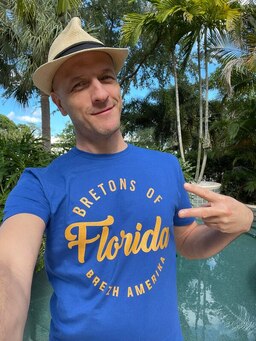 BREIZH AMERIKA PROFILES | Tangi Colombel Nous racontons les histoires de membres qui tissent des liens entre les USA et la Bretagne. Tangi Colombel vit en Floride. Il nous raconte son histoire d'expatrié, son nouveau livre et ses futurs projets. Quel est votre lien avec la Bretagne. Je suis né à Pontivy, et j’ai grandi à Loudéac dans les Côtes d’Armor. J’ai ensuite fait des études à l’université de Rennes II avant de partir à Paris pour suivre des cours de théâtre au Cours Simon. Je retourne tous les étés du côté de Saint Brieuc pour retrouver ma famille qui y habite encore. Pourquoi avez-vous choisi de vous installer en Floride ? Par amour, y a-t-il de meilleure raison ? Quels ont été certains de vos défis lorsque vous êtes arrivé en Amérique ? J’ai dû réapprendre une nouvelle langue. Ils ne parlaient ni breton, ni gallo ! Blague à part, j’ai souhaité continuer la carrière d’acteur et de chanteur que j’avais à Paris, il a fallu bien sûr améliorer mon anglais mais surtout recréer un réseau de professionnel sans lequel un artiste ne peut pas travailler (agent, directeur de casting etc.). J’ai eu énormément de chance à vrai dire, et je n’ai pas eu le sentiment de me retrouver face à des murs infranchissables. J’ai commencé par des cours de théâtre en anglais et ma première audition a été la bonne. J’ai décroché l’un des quatre rôles principaux dans le musical « Jacques Brel is alive and well and living in Paris ». Un carton, des Awards, d’excellentes critiques, ma carrière était lancée. Parlez-nous de votre carrière et de votre nouveau livre. Cela fait maintenant 20 ans que je vis à Palm Beach et la chance ne m’a jamais quitté. Je n’ai pas cessé de monter sur scène pour du théâtre (Dangerous liaisons, Le peignoir aux alouettes), des musicals (Fiddler on the roof, The fantasticks), de tourner des films (Bienvenue à bord, Step Up revolution), des séries télévisées (Netflix, CBS, Sony, NBC) des publicités (Sprite, NC Lottery), et tout ça en français, anglais et espagnol. J’ai également eu le plaisir de tourner aux quatre coins du monde avec mon cabaret de chansons françaises « Pardon my French ». Privé, comme beaucoup d’artistes, de mon moyen d’expression pour cause de pandémie, je me suis plongé à corps perdu dans l’écriture afin de laisser ma créativité s’exprimer. Et ce qui n’avait démarré que comme un simple passe-temps, s’est transformé en véritable passion. « La Saint-tous-là » est mon premier roman, fruit de deux années de travail et de plaisir. En voici le résumé : Maurice Loiseau se retrouve au chômage après le dépôt de bilan de l’entreprise familiale au début des années 80. C’est le choc pour toute la famille, comme nous le raconte Tangi, notamment pour ses trois sœurs et lui qui hériteront alors d’un apprenti père au foyer. Au sein d’un environnement familial contraint par le lourd handicap d’Emmanuelle, la cadette, chacun à son niveau fera de son mieux pour contribuer à redresser la barre. Dans cette famille aimante aux parents catholiques pratiquants tirant sans cesse le diable par la queue, mais également soixante-huitards aux doutes mécréants, on ouvre volontiers la porte, la huche et les cœurs à tous les nécessiteux de mondes parfois interlopes, malgré l’adversité. On tente de vivre selon les valeurs profondes auxquelles on croit. De tentative de formation en rebondissement, de projets ambitieux en porte de sortie inattendue, la smala vivra une épopée, une aventure humaine hors du commun. La Saint Tous Là est un récit touchant, pétri d’humanité. C’est parfois triste quand la vie ne fait pas de cadeaux. C’est souvent drôle quand les enfants, joueurs impénitents, tentent de la déchiffrer de leur regard tout neuf. Depuis les traditions bretonnes des villages d’Armorique aux croyances innombrables – spiritisme, loups-garous… – jusqu’aux rêves de star de la lointaine Amérique, Tangi se trace son chemin… Qu’est-ce qui vous manque le plus en Bretagne ? Ma famille évidemment. Et plus j’avance en âge, plus elle me manque. Et au-delà de ça, l’idée même de la Bretagne, son identité, ses valeurs. Sans parler de ses paysages et de ses villes. J’en parle dans le livre, j’ai passé beaucoup d’été à Saint Cast et je me vois très bien acheter un pied-à-terre là-bas pour les étés. De manière à avoir un pied sur chaque continent. Les français/bretons que je rencontre partagent tous un peu ce rêve-là. |
Categories
All
Blog Archives
June 2024
Breizh Amerikais an organization established to create, facilitate, promote, and sponsor wide-ranging innovative and collaborative cultural and economic projects that strengthen and foster relations and cooperation between the United States of America and the region of Brittany, France. 
|
 RSS Feed

Copyright 2014 - All rights reserved - Breizh Amerika - Privacy Policy